

luminous lookout:
indelible tales
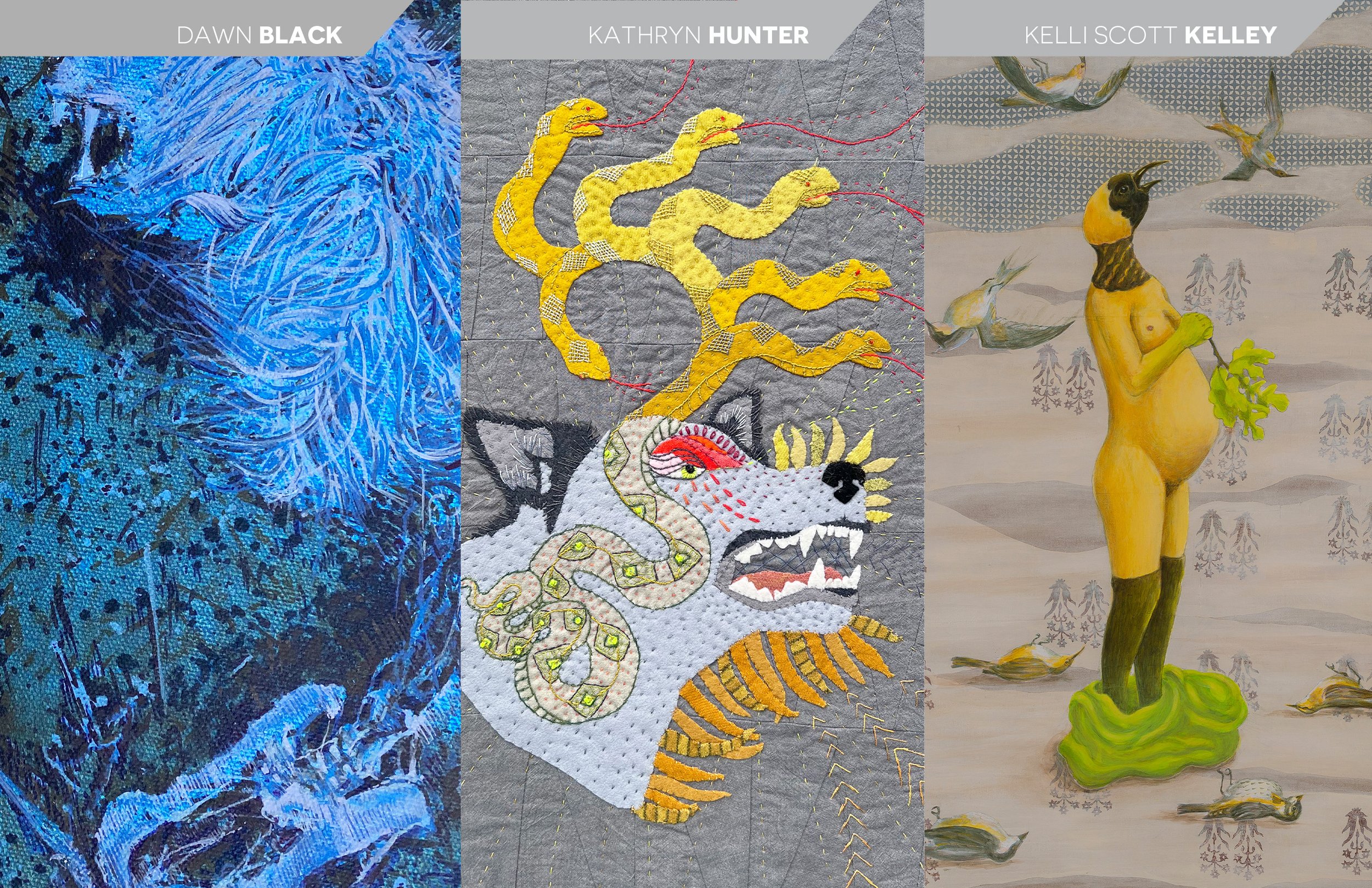
sep 3 - 26, 2024
FIRST WEDNESDAY OPENING: sep 4 FROM 6 - 9PM
ARTICULATE ARTIST TALK: SUNDAY, sep 8, AT 4PM.
NORMAL GALLERY HOURS: TUE - SUN, 12PM - 6PM
FOLLOW US AT BRGALLERY FOR UPDATES AND IMAGES!
Stories are essential to the human experience, influencing our perception of the world and our interactions with one another. The title of the exhibit, “Indelible Tales”, refers to visual narratives that leave a lasting impression, ones that are hopefully unforgettable and deeply impactful. Tales that etch themselves into our memory, shaping our thoughts, emotions, and perspectives in a way that cannot be easily erased or forgotten.
Luminous Lookout is a group of three Southern Louisiana-based artists, including Dawn Black, Kathryn Hunter, and Kelli Scott Kelley. Using representational imagery, their work visualizes narratives to inspire social dialogue and critique. Teetering moral ambiguities, existential repetitions, and anthropomorphic allegories are shared threads woven throughout all the artists’ work.
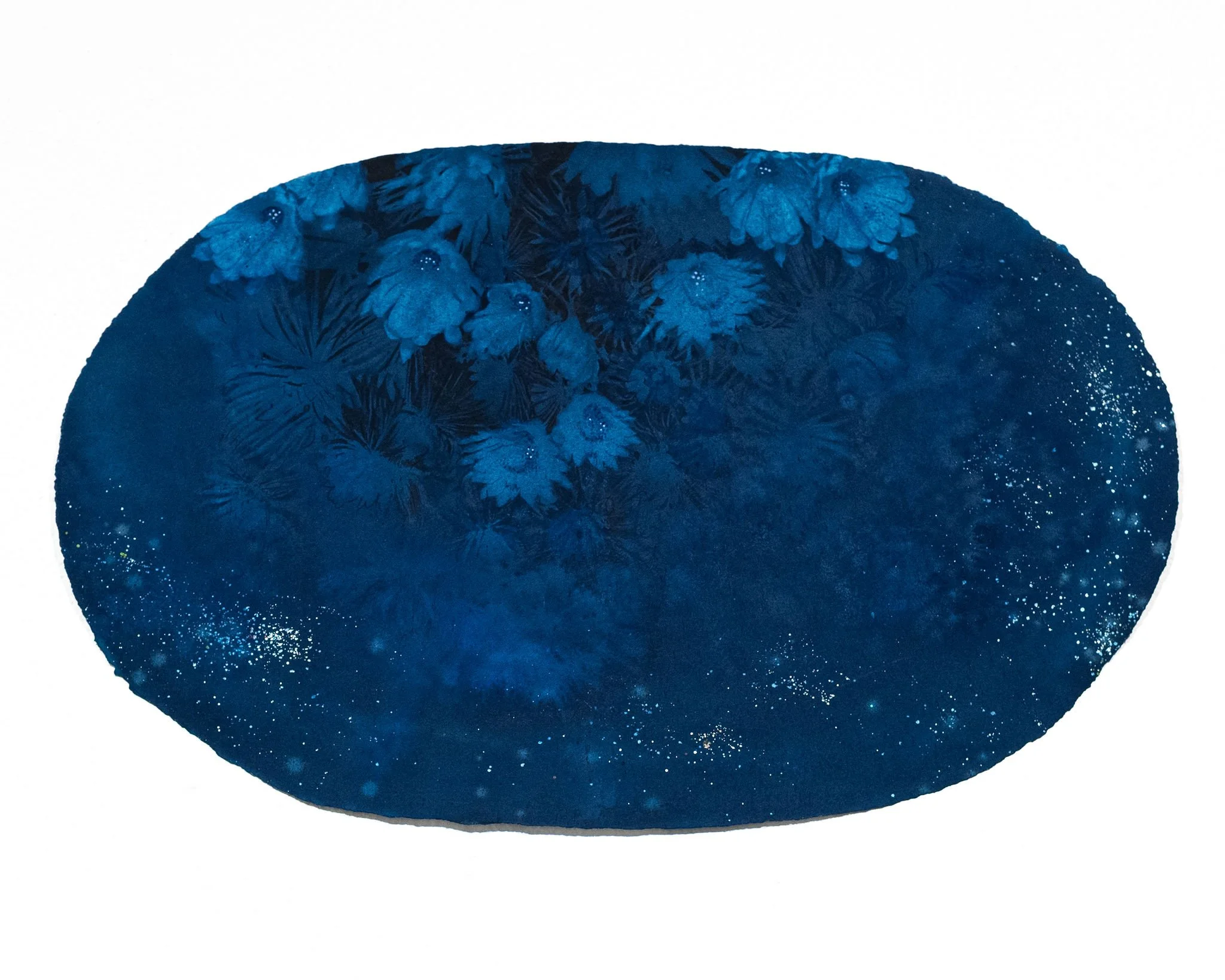
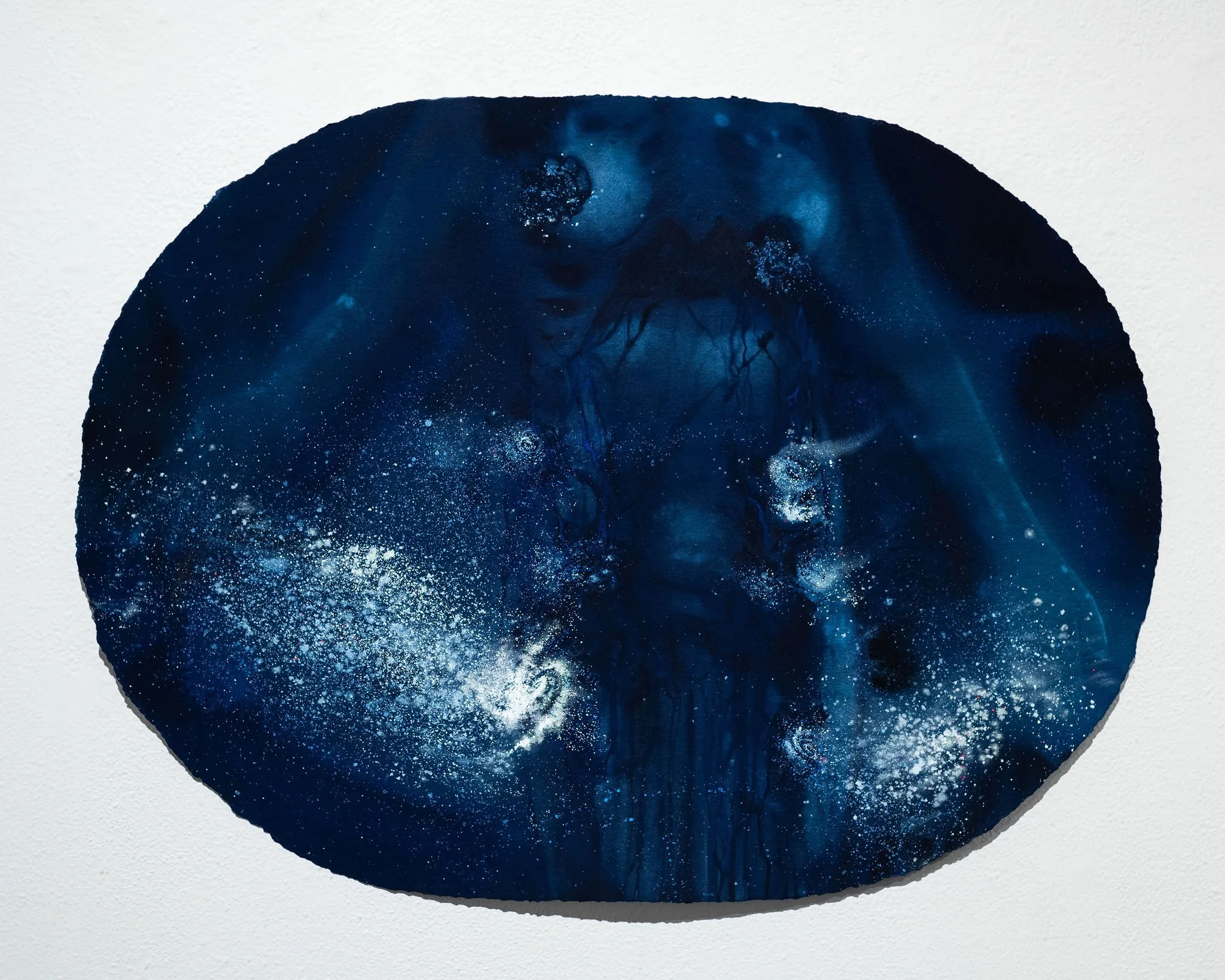
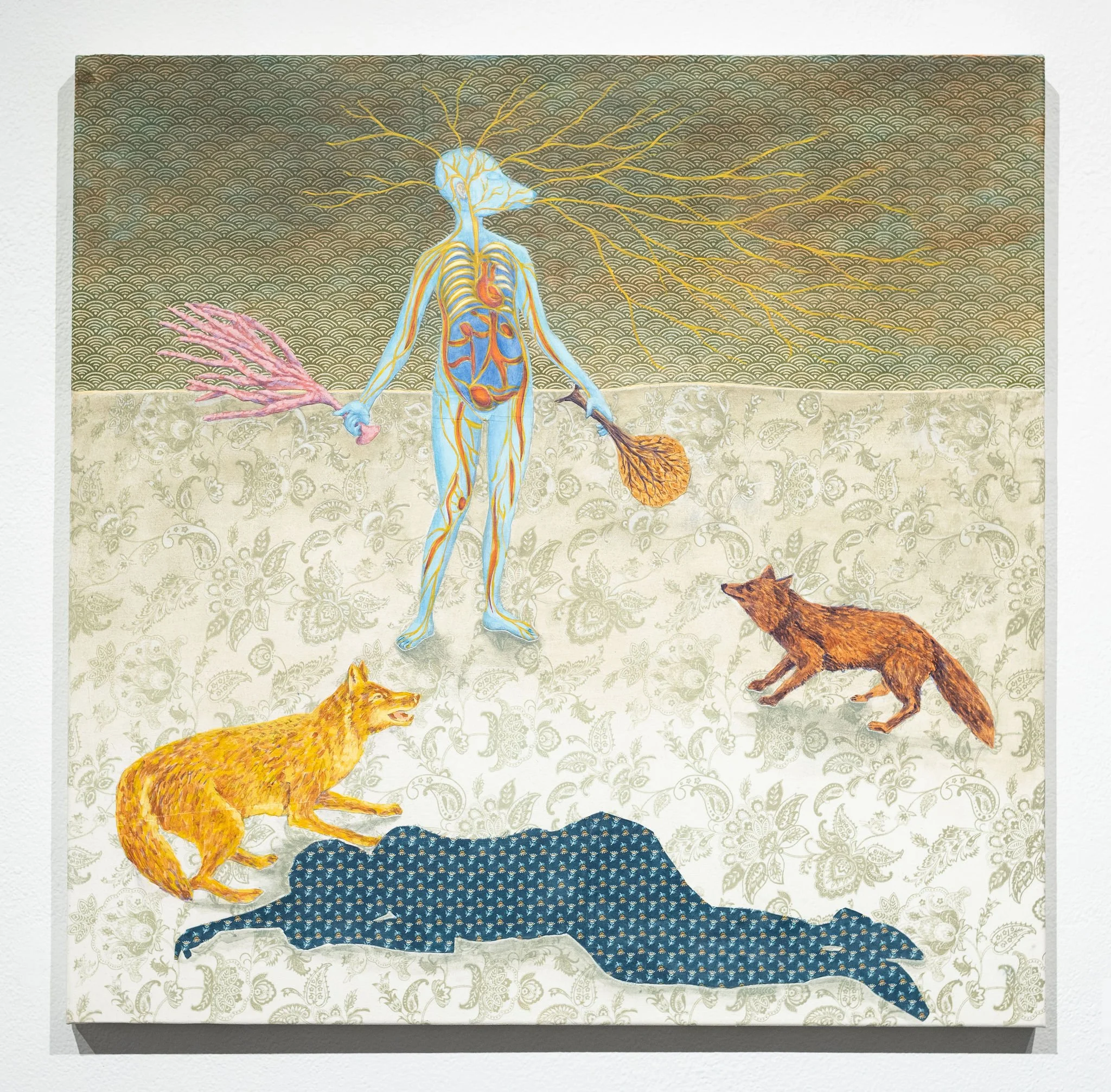
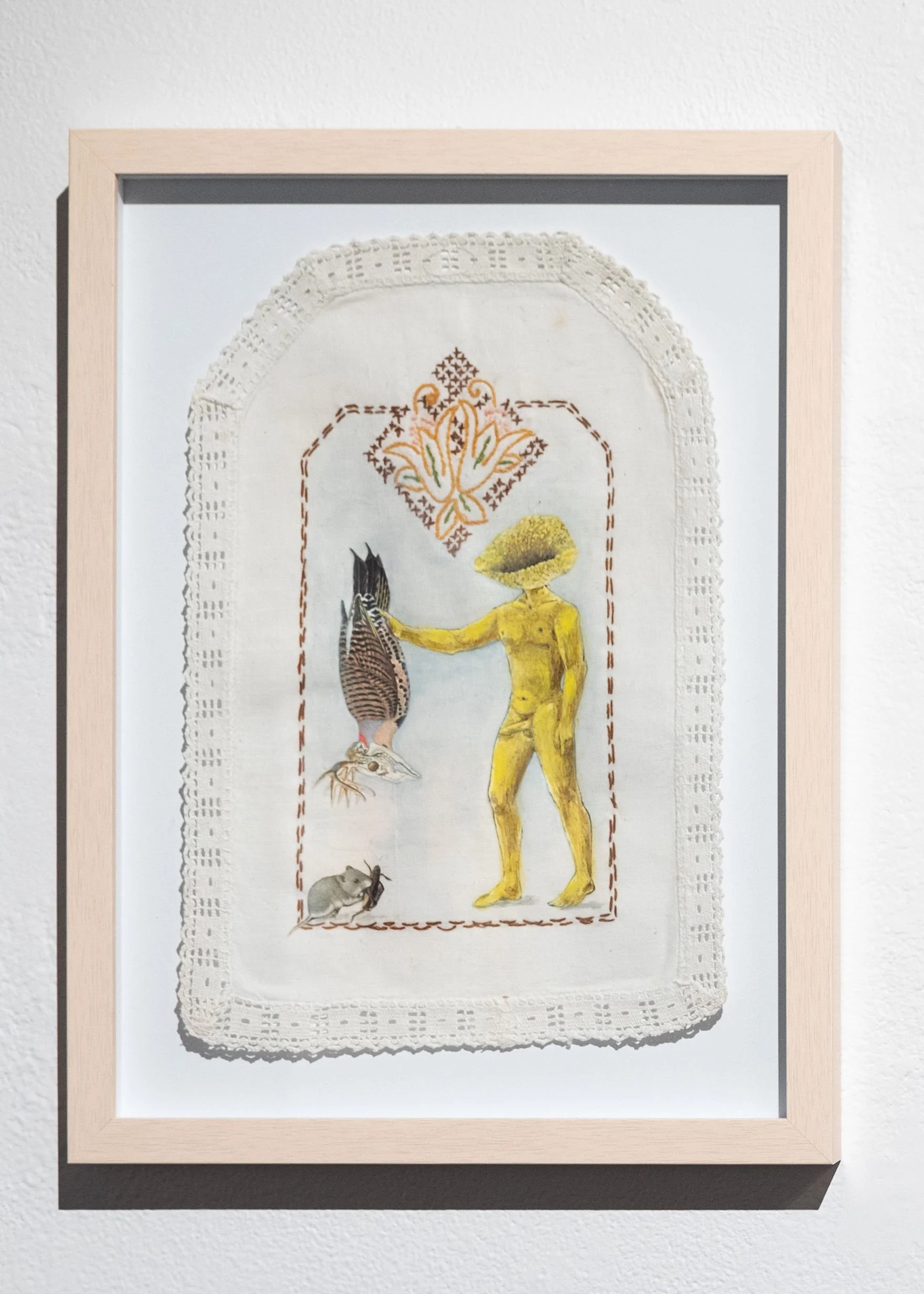
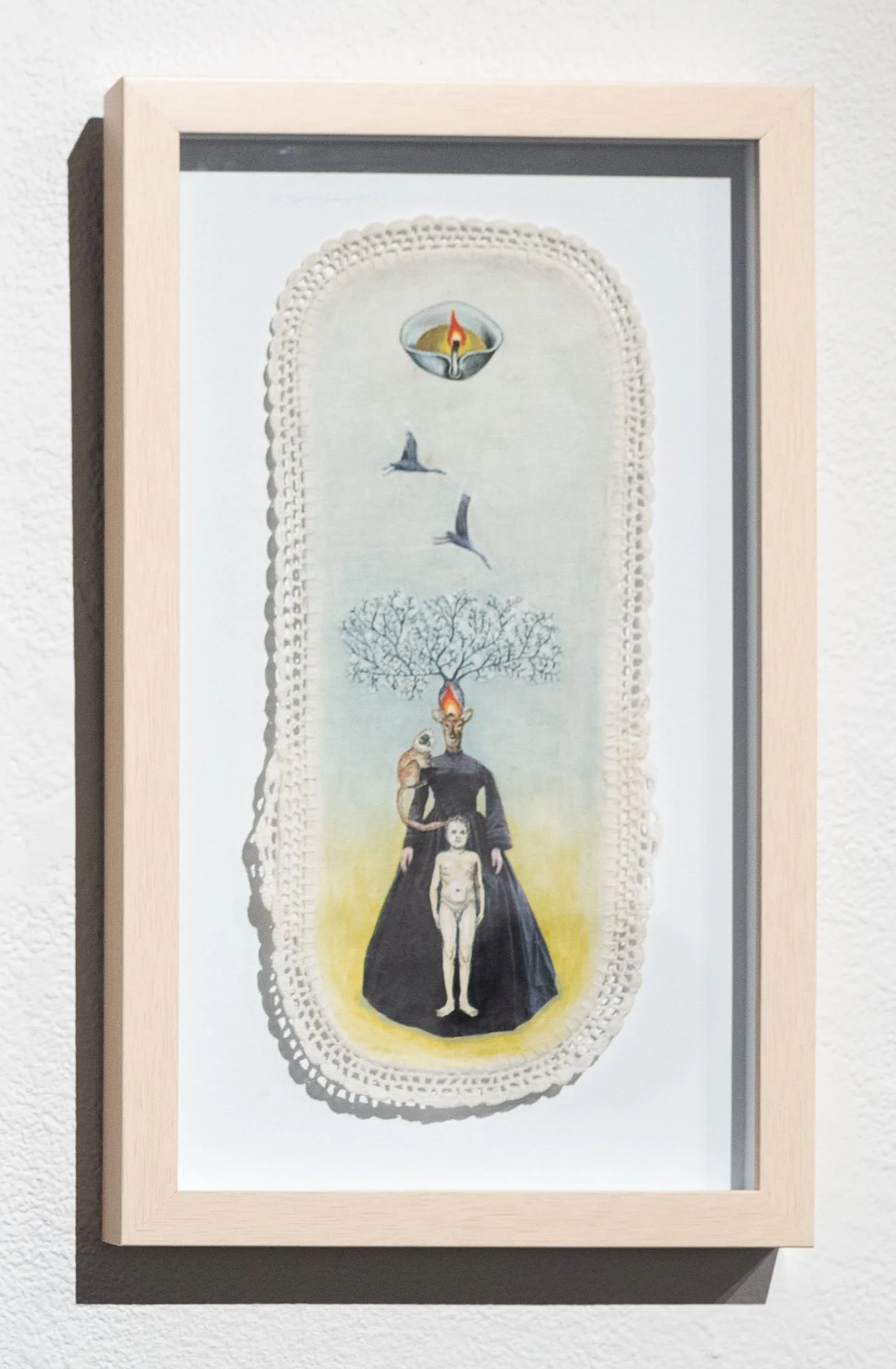
Each artist employs unique materials and processes to create their work. Black’s work is inspired by the Brothers Grimm story, Thousand Furs, a tale about Mankind’s devastating consumption of beauty and sex, and the need to dominate. How to create a sense of overwhelming quiet, the fear and awe of running through a forest at night, and of a landscape’s magic realism, in general, led to experimenting with different materials, such as painting on cyanotypes. Hunter’s mixed media work is populated by stitched, paper-cut, and relief-printed anthropomorphic figures and natural elements, which evoke fables and reflect on our connection to the natural, historical, and cultural environment. Kelley’s enigmatic narrative paintings incorporate collage, using vintage linens and other re-purposed paper and fabrics. The found materials reference domesticity and the history of women’s handicrafts and allow for a more ecological art-making practice.
The Luminous Lookout artists’ haunting, curious images address the current fragility of our time and provoke critical thought about our place in the world.
This exhibition is a blended showing of works from artists Dawn Black, Kathryn Hunter, and Kelli Scott Kelley. All works from these artists are on view, free of charge, during regular gallery hours (12 - 6 p.m., Tue - Sun) from Sep 3 - 26, 2024.
works on view (in order of artist’s last name)
dawn black




kathryn hunter
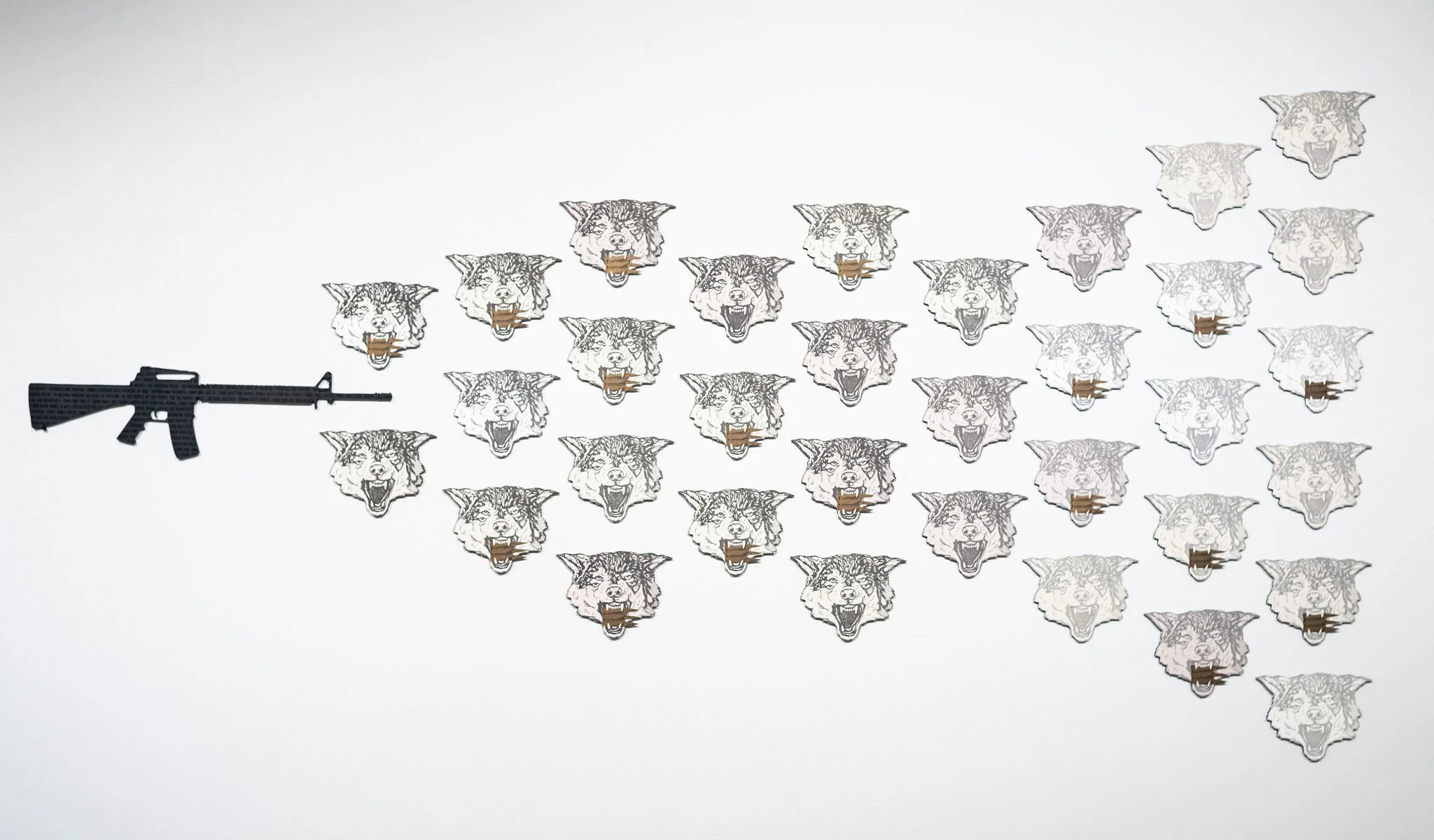
woodcut on paper mounted on wood, laser engraving, installation
Predator explores the question of what or who is a predator. In 2008, 16 million guns were bought legally. By 2020, that number increased to 23 million sold. Now infamous for being used in mass shootings across the US, the AR-15, not long ago was a weapon bought on the fringe. As little as 20 years ago, assault rifles and tactical gear were not considered part of the social norm and not allowed to be displayed at trade shows. After 2008, and the wars in Afghanistan and Iraq, the AR-15 became a glorified weapon of war. And as the Americans who saw a threat of having a Black man elected to the Presidency, fear for the 2nd Amendment right became a war cry. Ryan Busse wrote in the article, "The Rifle that Ruined America" (published in The Atlantic, June 2022), that the gun industry called Obama "The Greatest Gun Salesman in America." And he goes on to say, we are seeing more and more "authoritarianism in the guise of freedom." Guns don't kill people, People with guns kill people. Predator is made up of an AR-15 silhouette with text engraved on the surface alongside 52 four eyed wolf heads (woodcuts), some carrying bullets in their mouths. Who's the predator in our world?

wool appliqué, embroidery, hand sewing, wool, cotton and fluorescent threads
27" x 43"

wool appliqué, embroidery, hand sewing, wool, cotton and fluorescent threads
22" x 18"

Wool appliqué, embroidery, hand sewing & quilting, machine piecing, cotton, fluorescent, glow-in-the-dark and cotton threads.
Indelible Tales presents the cosmos of permanent marks made by the highest court in the land, the Supreme Court. Marks made intentionally, thoughtfully, and mindfully creating an everlasting legacy that continues to shape our cultural landscape today.
Dred Scott v. Sanford, 1857 - stated that enslaved people were not recognized as US citizens, therefore could not expect protection by the federal government.
Elk v Wilkins, 1884 - ruled that Native Americans were not citizens by birth under the 14th Amendment and therefore did not have the right to vote.
Plessy v. Ferguson, 1896 - Upholding a Louisiana state law, this ruling stated that the constitutionality of racial segregation laws did not violate the equal protection clause in the 14th Amendment and were therefore legal with separate but equal accommodations for the "white and colored races".
US v Bhagat Singh Thind, 1923 - decided that Thind, an Indian immigrant who would have been identified as Aryan or Caucasian, was not eligible to be a US citizen because he was not "white" in the eyes of the common man. This decision also led to the denaturalization of over 50 Asian Indian immigrants that had earlier become US citizens.
Korematsu v United States, 1944 - upheld the internment of Japanese Americans in World War II and stated that it was justified in order to reduce the risk of espionage. The ruling stated that it was not based on race but instead a "military necessity".
Brown v Board of Education, 1954 - ruled that state laws establishing racial segregation in public schools were unconstitutional. This ruling paved the way for integration in many spaces, 58 years after Plessy v Ferguson.


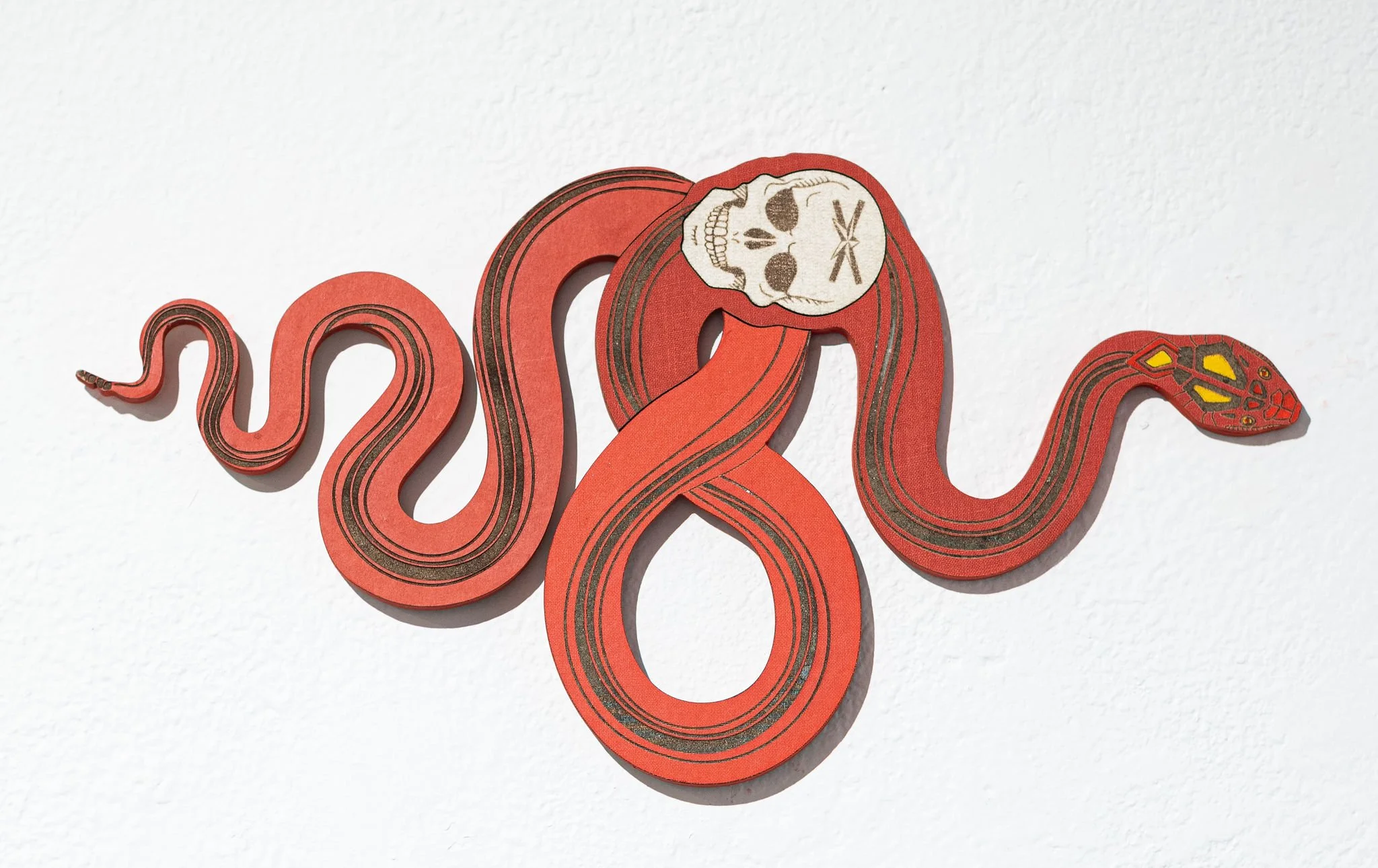
laser cut vintage book covers, paint
14" x 7.5" x 0.25"
Southern Poverty Law Center launched the Whose Heritage? project in 2015 documenting live Confederate monuments and memorials across the US and their removal or renaming. Data shows that most Confederate monuments were erected during the era of Jim Crow laws, reinforcing the myth of the Lost Cause and promoting white supremacist values of the Confederacy. SPLC has since published a second and third edition of the Whose Heritage? report. Read more about what conclusions have been made from this vast collection of data, how to assist in removing hate from public spaces, view the public map, and look ahead to see how we can make our collective history

laser cut vintage book covers, paint
14" x 7.5" x 0.25"
Southern Poverty Law Center launched the Whose Heritage? project in 2015 documenting live Confederate monuments and memorials across the US and their removal or renaming. Data shows that most Confederate monuments were erected during the era of Jim Crow laws, reinforcing the myth of the Lost Cause and promoting white supremacist values of the Confederacy. SPLC has since published a second and third edition of the Whose Heritage? report. Read more about what conclusions have been made from this vast collection of data, how to assist in removing hate from public spaces, view the public map, and look ahead to see how we can make our collective history

laser cut vintage book covers, paint
14" x 7.5" x 0.25"
Southern Poverty Law Center launched the Whose Heritage? project in 2015 documenting live Confederate monuments and memorials across the US and their removal or renaming. Data shows that most Confederate monuments were erected during the era of Jim Crow laws, reinforcing the myth of the Lost Cause and promoting white supremacist values of the Confederacy. SPLC has since published a second and third edition of the Whose Heritage? report. Read more about what conclusions have been made from this vast collection of data, how to assist in removing hate from public spaces, view the public map, and look ahead to see how we can make our collective history


laser cut vintage book covers, paper cut, relief printing, drawing, paint
18" x 12"

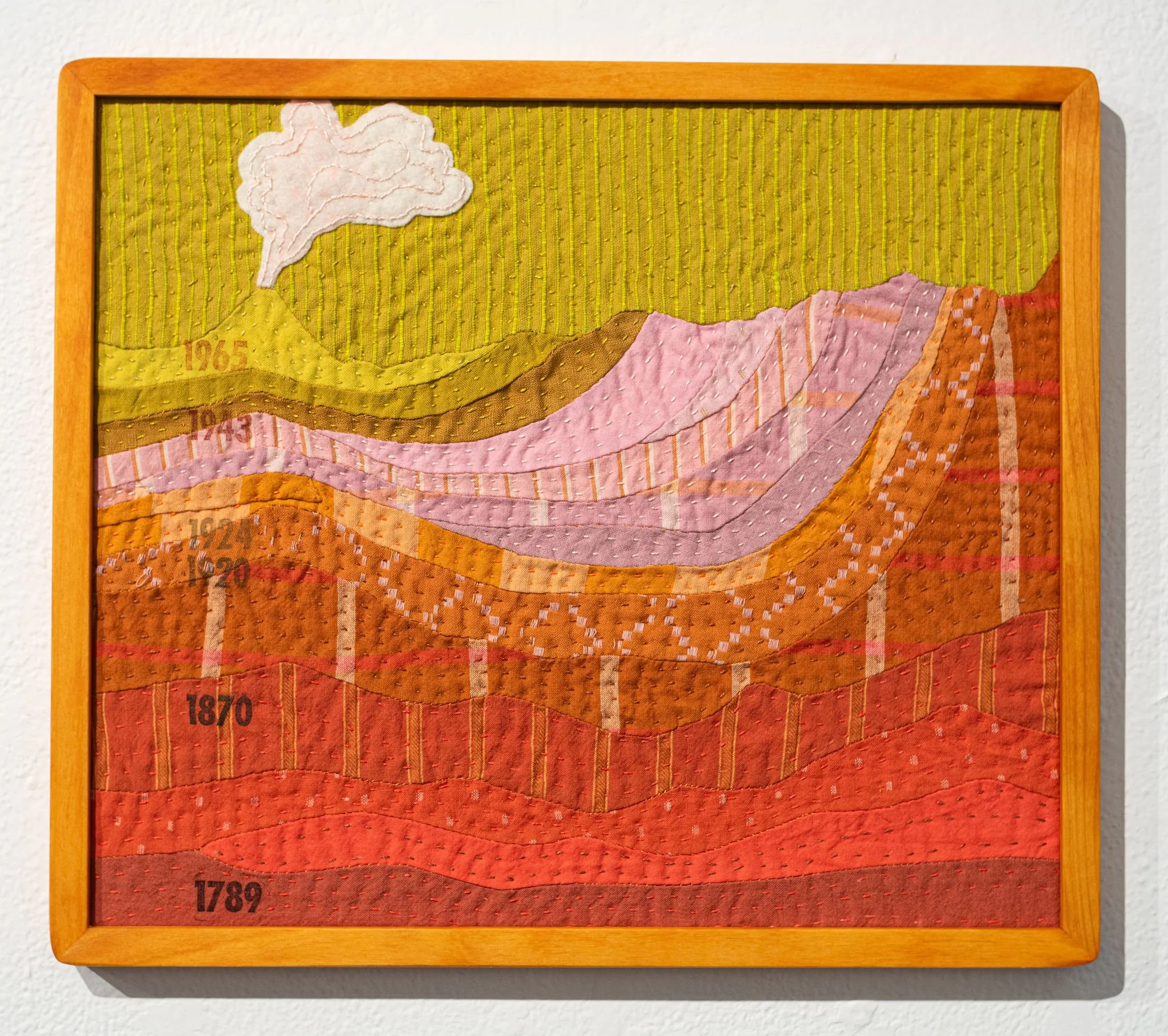
hand sewing, cotton, letterpress printing
12" x 14"
Democracy is defined as rule by the people. "A system of government in which power is vested in the people and exercised by them directly or through freely elected
representatives" (Britannica). Geo History of Democracy illustrates the legacy of the indelible layers of intentional voter suppression and laws in US history.
1789: US states are given the power to establish voting rights standards. The right to vote is reserved solely for property owning or tax paying white males.
1870: 15th Amendment was ratified giving Black men the right to vote. Barriers were quickly created to block that right; poll taxes, literacy tests, and other "Jim Crow" laws.
1920: 19th Amendment was ratified giving women the right to vote. States constructed other restrictions and discriminatory laws making this right to be acted only by white women.
1924: The Indian Citizenship Act was enacted giving Native Americans the right to vote. Though states continue to create barriers to disrupt casting ballots.
1943: Chinese Exclusion Act ends allowing for Asian immigrants and American-born families to receive citizenship and the right to vote.
1965: Voting Rights Act becomes law granting the right to vote to all US citizens by banning restrictions and other laws, enforcing the 15th Amendment on a federal level.
2024: Today we still see many barriers to the right to vote, especially for people of color, immigrants, and other non-white citizens. A few examples, but not limited to: gerrymandered districts, voter roll purges, lack of language access, polling place closures, ID requirements, and accessibility.

"Burn it Down I"
letterpress on paper and vintage book covers, mounted on wood
9" x 6"

"Wide Awake"
letterpress on paper and vintage book covers, mounted on wood
9" x 6"


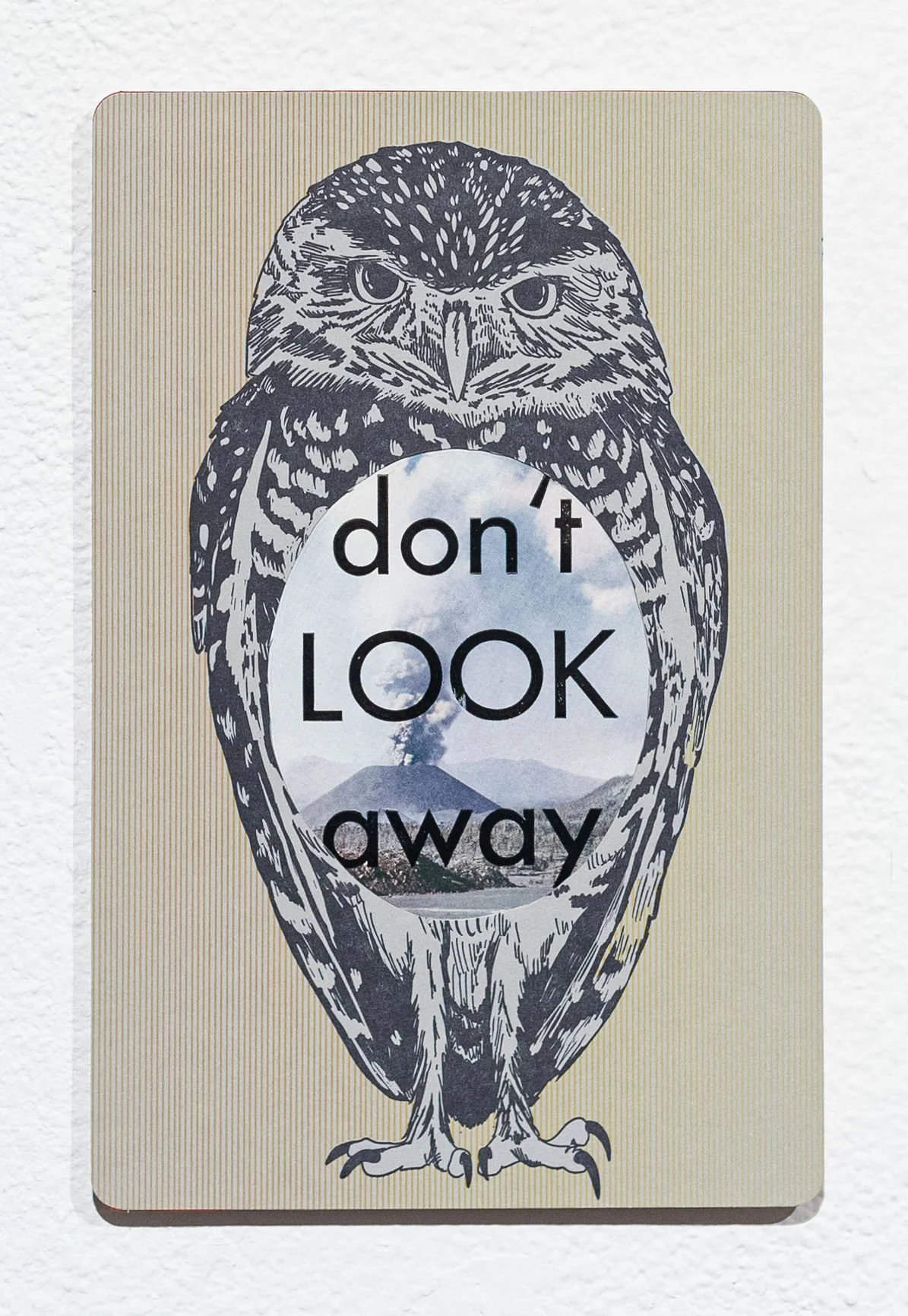
"Don't Look Away"
letterpress on paper and vintage book covers, mounted on wood
9" x 6"

"Burn it Down II"
letterpress on paper and vintage book covers, mounted on wood
9" x 6"
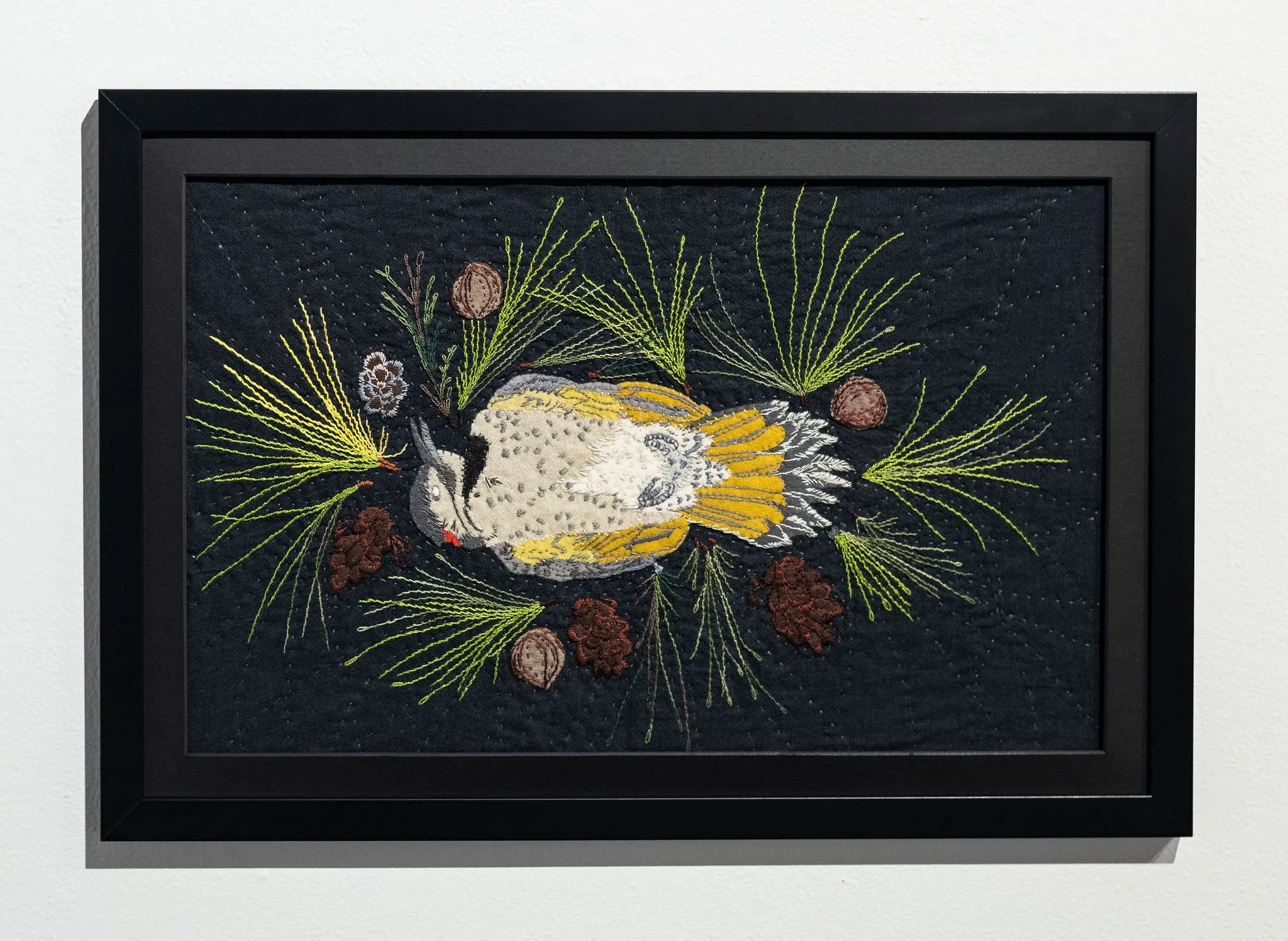





Cyanotype with watercolor, gouache, and ink on paper
12" x 19.5"